
Markets US
The Federal Reserve maintained its benchmark rate in the 3.75%-4% range, citing inflation risks tied to rapid growth in AI-related debt and opaque financing structures.
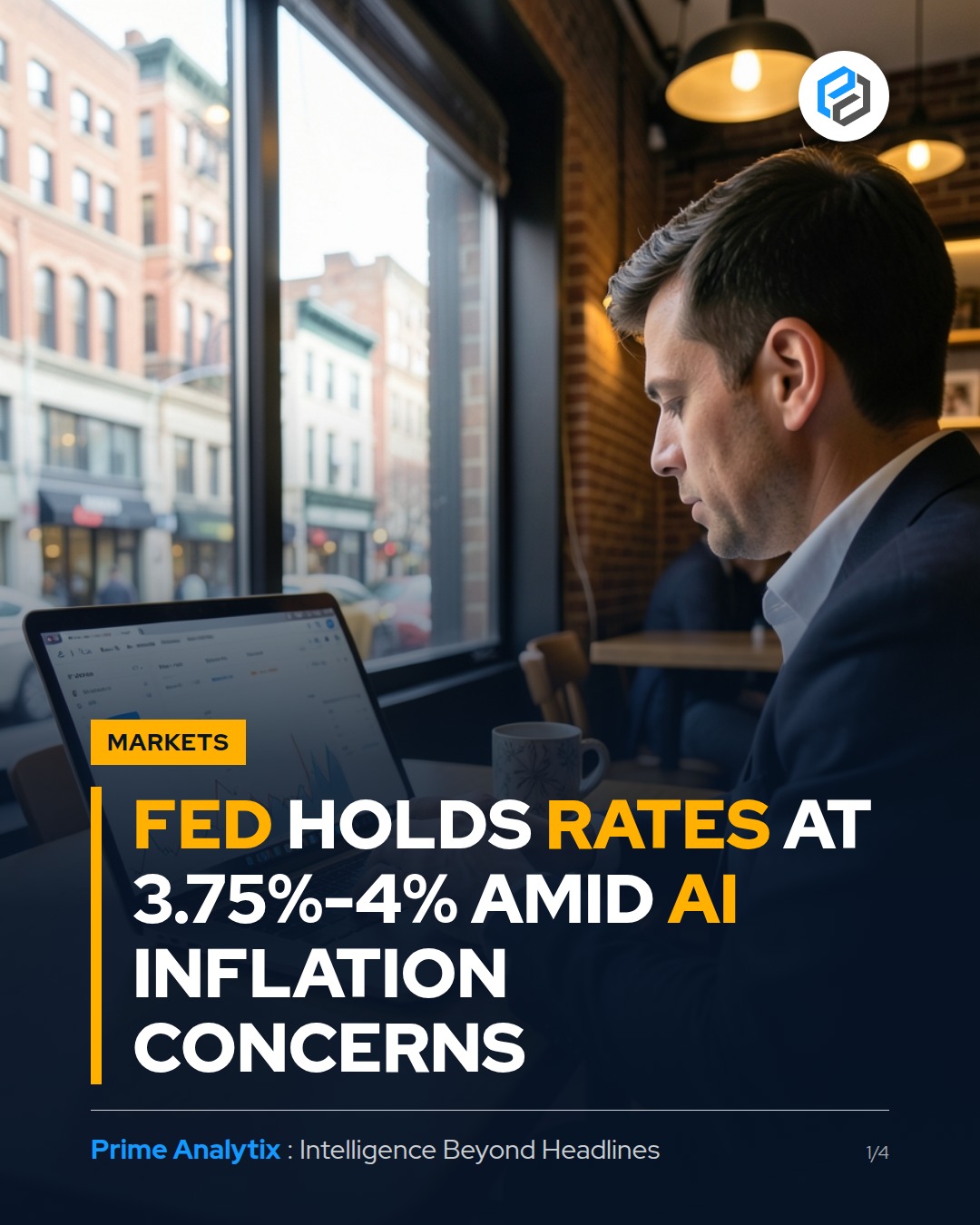
In a policy decision that underscores growing concerns over technology-driven economic pressures, the Federal Reserve held rates steady at 3.75%-4%, as outlined in minutes from its October 2026 meeting. Almost all participants believed further rate hikes would be appropriate to address inflation risks linked to AI expansion and financial instability. The FOMC voted 10-2 against raising interest rates, with dissenters advocating for a quarter-point increase.
Fed Governor Christopher Waller suggested the possibility of a half-point hike in December, while St. Louis Fed President Alberto Musalem warned that as much as a full percentage point could be needed by spring 2027 to counter inflationary pressures. Consumer prices rose slightly more than expected in October 2026—up 0.4% for all items and 0.3% for core CPI, both exceeding forecasts.
The Fed’s focus on AI as a key driver of inflation risk signals potential shifts toward sector-specific monetary policy frameworks. However, divergent views among policymakers may delay or unevenly apply tightening measures, creating uncertainty in financial markets. Officials expect inflation to fall sharply by 2027 as current shocks subside, but the need for aggressive action remains evident.
AI-related debt growth through opaque financing structures poses a significant risk if returns fail to meet expectations, according to Fed minutes. Chicago Fed President Austan Goolsbee warned that failure to act decisively could undermine the central bank’s credibility in managing inflation.
The December 2026 FOMC meeting will decide on rate adjustments, with markets pricing a 25-basis-point hike as likely. The Fed plans to monitor inflation trends through 2027 and may consider larger increases by spring of next year. Policymakers are also expected to assess AI-related financial risks in greater detail.
The Fed’s cautious stance on rate hikes highlights the complex balance between managing inflation and addressing emerging technological challenges, with significant implications for markets and economic stability moving forward.
Topics: Federal Reserve Policy, AI Economic Impact, Central Bank Inflation Control, Market Uncertainty, Financial Stability Risks
#FedRateDecision #AIInflationRisk #CentralBankPolicy #MarketUncertainty #FinancialStabilityRisks
Source: CNBC
Post a Comment
Post a Comment