
Markets US
Audi's CEO defended the company's $4 billion investment in a new U.S. manufacturing plant in Georgia, set to start production in the early 2030s, as part of Volkswagen Group's restructuring amid rising tariffs and trade tensions.
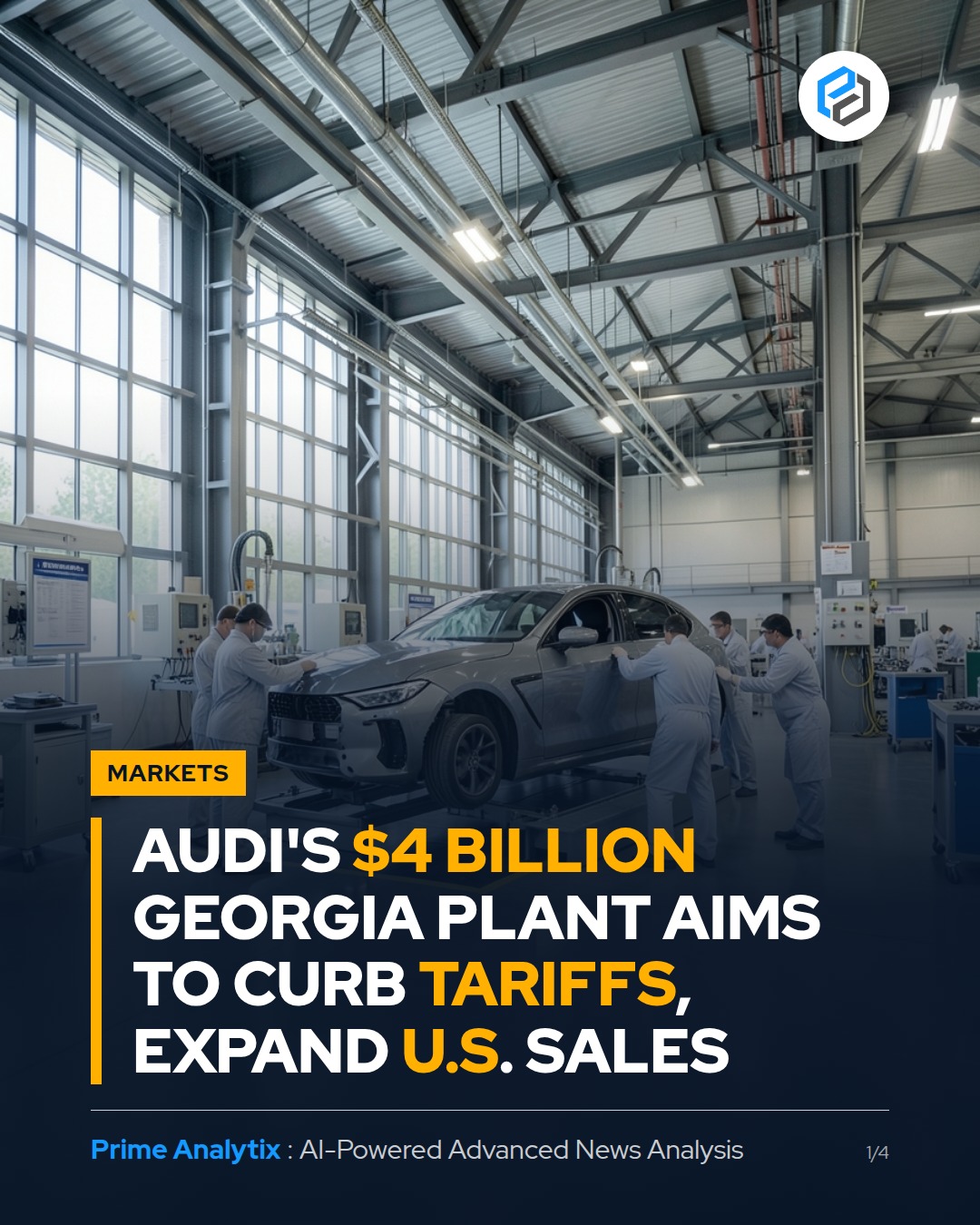
Audi's $4 billion Georgia plant, expected to begin operations in the early 2030s, aims to reduce the company's exposure to U.S. tariffs, which cost it 1.2 billion euros in 2025. The facility will produce up to 200,000 vehicles annually, with half exported outside the U.S., according to the company. The decision aligns with Volkswagen Group's plan to close four German plants and cut 50,000 jobs by 2034, as reported by CNBC. By localizing production, Audi seeks to capture growth in the U.S. premium market, where it faced flat sales in the third quarter of 2025 after a 16% decline from 2024 to 2025. The plant also pressures competitors like BMW and Mercedes-Benz, which already have U.S. manufacturing bases, while potentially straining Audi's German operations, as the CEO noted Georgia does not replace Germany's role in development and technology.
The 15% U.S. tariff on German vehicles, down from 25%, remains a key financial burden for Audi. The Trump administration had pressured the company to announce the plant at a Georgia rally ahead of the 2026 midterms. Success hinges on meeting production targets and navigating shifting trade policies, which could reintroduce tariffs or alter regulations. Audi's CEO emphasized the plant's role in reducing costs and improving competitiveness in the U.S., though risks include supply chain disruptions and market demand fluctuations.
Audi and Volkswagen Group are directly affected by the plant, which reduces reliance on European and Mexican imports. U.S. consumers may benefit from lower costs and increased competition, while the U.S. government could gain from job creation and reduced trade deficits. German automakers like BMW and Mercedes-Benz face indirect competition from Audi's expanded U.S. presence. The plant's impact on Audi's German operations remains a key unresolved issue, with the CEO stressing that Georgia complements, rather than replaces, Germany's role in innovation.
The project reflects broader strategic shifts within Volkswagen Group as it restructures amid geopolitical tensions. Audi's move to localize production underscores the growing importance of U.S. manufacturing for European automakers seeking to mitigate tariffs and capture market share. However, the long-term success of the plant depends on achieving its production and export targets, which could be influenced by evolving trade policies and market conditions.
Audi plans to announce additional details on U.S. investments and production in the future. Production of the Q7, Q8, and Q9 models is expected to begin in the early 2030s.
Audi's $4 billion Georgia plant aims to reduce U.S. tariff costs and boost sales, but its success depends on meeting production targets and navigating trade policy shifts. The key uncertainty remains whether localized production will significantly enhance competitiveness in the U.S. premium market.
Topics: AutomotiveIndustry, TradePolicy, PremiumCarMarket, AutomotiveManufacturing, USTariffs, VolkswagenGroup, AudiUSSales, GermanAutomakers, 2030sProduction, AutomotiveIndustry
#AutomotiveIndustry #TradePolicy #PremiumCarMarket #AutomotiveManufacturing #USTariffs #VolkswagenGroup #AudiUSSales #GermanAutomakers #2030sProduction #AutomotiveIndustry #PrimeAnalytix
Source: CNBC
Post a Comment
Post a Comment